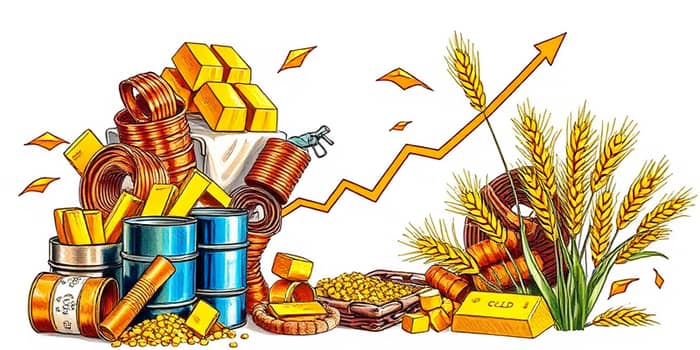
Commodities have shaped civilizations and markets for centuries. From ancient spice trade routes to modern energy corridors, these raw materials underpin global economies and individual portfolios alike.
Understanding how to navigate this asset class can empower investors to capture unique opportunities and manage portfolio volatility.
Categories of Commodities
Commodities are broadly classified into two groups: soft and hard. Each category reflects distinct supply dynamics, consumption patterns, and market drivers.
Soft commodities include agricultural and livestock products such as corn, wheat, soybeans, coffee, cotton, live cattle, and poultry. These items are vulnerable to weather events, global consumption trends, and seasonal cycles.
Hard commodities consist of extracted resources like metals and energy. Precious and industrial metals—gold, silver, platinum, copper, aluminum, and iron ore—serve both monetary and industrial functions. Energy commodities include crude oil, natural gas, coal, and uranium.
Why Invest in Commodities?
Investing in commodities offers unique portfolio diversification across major markets, as these assets often move independently of stocks and bonds. They can hedge against inflation and geopolitical uncertainty.
Historically, commodities have shown the ability to act as an inflation hedge during rising price environments. When consumer prices climb, commodity values tend to follow, protecting purchasing power.
- Benefits include potential price appreciation driven by global demand and supply imbalances.
- Exposure to critical resource cycles that influence industrial production and consumption.
- Tactical opportunities in short-term shortages or seasonal fluctuations.
However, investors should remember that volatility can be significantly higher in commodity markets compared to traditional equity instruments.
How to Invest in Raw Materials
There are several pathways to gain commodity exposure, each with its own advantages and challenges. Selecting the right vehicle depends on your investment goals and risk tolerance.
Physical ownership of gold, silver, or platinum bullion offers direct exposure but brings storage and security challenges over time. Minimum investments can be high, and liquidity may be limited.
Exchange-traded funds (ETFs) and exchange-traded notes (ETNs) provide diversified baskets of commodities or single-asset tracking. They trade like stocks, offer low minimums, but incur management fees and possible tracking error.
Futures and options contracts allow for leverage and hedging but require advanced knowledge and risk management. Standardized instruments can magnify both gains and losses.
Commodity-related stocks and mutual funds let you invest in producers—mining, oil, and agricultural firms—but these carry corporate governance and operational risks.
2026 Market Outlook and Forecasts
Looking ahead to 2026, global growth is expected to remain steady, while central banks may cut rates, supporting asset prices. Structural trends like the clean energy transition and evolving geopolitics will drive demand for key resources.
Precious metals are anticipated to rally on fiscal and monetary support, while industrial metals benefit from infrastructure and green energy investments. Oil prices may fluctuate, balancing production cuts against shifting demand.
Risks and Considerations
Despite the appeal, commodity investments carry significant risks. Price swings can be abrupt, driven by geopolitical events disrupt supply chains and regulatory changes.
Perishability and storage costs affect agricultural goods, while energy assets may face environmental policy headwinds. Boom-bust cycles are common in metals and energy, requiring vigilant monitoring.
- Interest rate moves can pressure commodity prices by altering opportunity costs.
- Supply shocks from weather or geopolitics may trigger sudden price spikes.
- Leverage amplifies both rewards and potential losses in futures and CFDs.
Proper risk management, position sizing, and diversification are essential when managing exposure to commodity markets.
Conclusion
Commodities remain a foundational asset class that can enhance a well-rounded portfolio. They offer unique inflation protection and cyclical diversification while exposing investors to global growth themes.
By understanding the categories, benefits, investment methods, and risks, you can craft a strategy that aligns with your objectives. Whether seeking long-term hedges or tactical opportunities, raw materials present a dynamic avenue for growth.
As 2026 approaches, stay informed on supply trends, policy shifts, and demand forecasts to navigate this complex but rewarding landscape.
References
- https://www.crystalfunds.com/insights/investing-in-commodities-primer
- https://graniteshares.com/institutional/us/en-us/research/how-to-invest-in-commodities/
- https://www.ubs.com/us/en/wealth-management/insights/market-news/article.3002623.html
- https://www.usbank.com/investing/financial-perspectives/investing-insights/why-and-how-to-invest-in-commodities.html
- https://home.cib.natixis.com/articles/commodities-markets-exploring-key-themes-for-2026
- https://www.nerdwallet.com/investing/learn/commodity
- https://www.ig.com/en/news-and-trade-ideas/commodities-market-outlook-for-2026-251212
- https://www.fidelity.com/learning-center/investment-products/mutual-funds/about-commodity-investing
- https://www.spglobal.com/market-intelligence/en/news-insights/research/2026/01/commodity-price-watch-january-2026
- https://www.pimco.com/us/en/resources/education/understanding-commodities
- https://www.worldbank.org/en/research/commodity-markets
- https://www.jpmorgan.com/insights/global-research/commodities/gold-prices
- https://www.northwesternmutual.com/life-and-money/what-are-commodities/