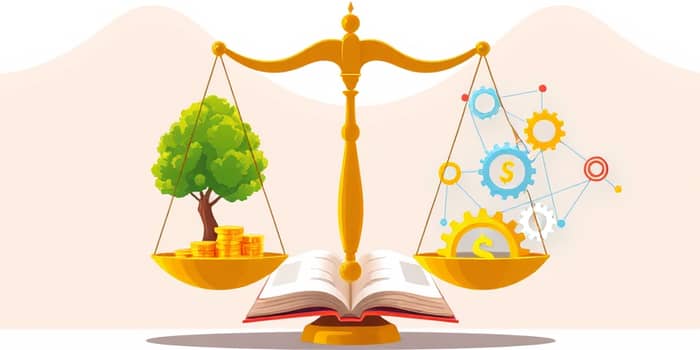
In an ever-evolving global economy, the concept of wealth demands a broader perspective than mere bank figures.
Understanding how to evaluate and build prosperity is essential for long-term well-being and generational success.
Limitations of Traditional Wealth Metrics
Conventional measures such as bank balances, net worth statements, and GDP figures emphasize short-term financial snapshots. While they offer simplicity, these metrics often overlook critical assets for sustainability. For example, GDP growth in nations like Ethiopia, Indonesia, and Trinidad and Tobago between 1995 and 2020 masked declines in natural capital and uneven gains in human development.
When policymakers or individuals rely solely on liquid assets, they fail to capture the value embedded in education, community networks, and ecological resources. This narrow focus can lead to misguided decisions about savings, spending, and investment strategies that undermine resilience and long-term prosperity.
Components of Comprehensive Wealth
Comprehensive wealth extends beyond cash and investments to include all sources that generate sustainable income and well-being over time. Economists categorize these assets into five core types:
- Natural capital: Land, water, forests, minerals that support ecosystems and economies.
- Human capital: Skills, education, and health that enable productive work and innovation.
- Social capital: Community networks, relationships, trust, and cultural institutions.
- Produced capital: Infrastructure, machinery, and buildings that facilitate commerce and daily life.
- Financial capital: Savings, investments, pension claims, and insurance products.
By integrating these five components, individuals and societies gain a more accurate picture of their true wealth. For instance, households may discover that their ongoing education or professional network contributes as much to future income as their investment portfolio.
Inequality and Wealth Distribution
Wealth concentration remains a defining feature of the twenty-first century. Globally, the top 0.001% of individuals—fewer than 60,000 multi-millionaires—now control over 6% of total assets, up from 4% in 1995. This elite group’s fortunes have grown at an average annual rate of 8% since the 1990s, while the bottom half of humanity has seen only modest gains.
Similarly, the top 10% of households typically hold between 50 and 70% of wealth within most nations, leaving the bottom 50% with a fraction. In the United States, the richest 10% of families owned 69% of national wealth in 2025. These disparities are further shaped by race, education, and household type, as evidenced by diverse retirement trajectories when measured by Annualized Comprehensive Wealth (ACW).
2026 Trends in Wealth Building and Planning
As we move through 2026, individuals and advisors are adopting innovative approaches to wealth accumulation and preservation. Several key trends are reshaping the landscape:
- Diversification across multiple asset classes: Real estate, stocks, bonds, ETFs, crypto, and side businesses.
- Technology integration: AI-powered finance apps like Mint, YNAB, and Personal Capital streamline tracking and automate budgeting.
- ESG and sustainable investing: Aligning portfolios with environmental, social, and governance criteria for impact and returns.
- Inflation hedges and automation: Commodities, real estate, and automated contributions to protect purchasing power.
- Continual skills development: Lifelong learning and upskilling to maintain human capital value in a changing job market.
These developments reflect a broader understanding that true wealth depends on adaptability, technology adoption, and alignment with personal values.
Tools and Strategies for Measuring and Growing Your Wealth
Effectively tracking and improving your comprehensive wealth requires clear goals, consistent monitoring, and periodic adjustment. The following framework can guide both individuals and financial professionals:
- SMART goal setting: Define Specific, Measurable, Achievable, Relevant, Time-bound objectives (for example, increasing retirement savings by 20% in five years).
- Key performance indicators (KPIs): Monitor net worth, debt-to-income ratio, savings rate, investment returns, and asset allocation.
- Annual reviews and adjustments: Reassess financial plans, inflation impacts, and life changes to stay on track.
By following this disciplined approach, you ensure all dimensions of your wealth—financial, natural, human, social, and produced—are nurtured and balanced for the long haul.
Conclusion: Embracing a Holistic View of Wealth
Transitioning from a narrow focus on bank balances to a comprehensive wealth mindset empowers individuals, communities, and nations. It helps uncover hidden strengths in education, relationships, and the environment, while exposing risks in overreliance on liquid assets.
By measuring and managing all forms of capital, you can craft a more resilient financial future that sustains you and future generations. Adopt diversified strategies, leverage technology, set SMART goals, and embrace the full richness of human and natural resources. In doing so, you will truly move beyond traditional definitions of prosperity and toward a sustainable, inclusive vision of wealth that endures.
References
- https://www.federalreserve.gov/econres/feds/inequality-in-comprehensive-wealth.htm
- https://www.thelandgeek.com/blog-wealth-building-strategies-2026/
- https://wir2026.wid.world/insight/executive-summary/
- https://www.iisd.org/publications/report/comprehensive-wealth-moving-beyond-gdp
- https://clearingcustody.fidelity.com/insights/topics/running-your-business/wealth-management-trends-for-2026
- https://blogs.cfainstitute.org/investor/2026/02/12/evolving-your-wealth-management-practice-for-2026-and-beyond/
- https://www.onedigital.com/en-US/articles/how-to-build-a-simple-financial-plan-for-2026/
- https://www.fnbo.com/insights/wealth/2025/top-trends-shaping-wealth-planning-in-2026
- https://www.pwc.com/us/en/services/audit-assurance/private-company-services/library/tax-wealth-planning-guide.html