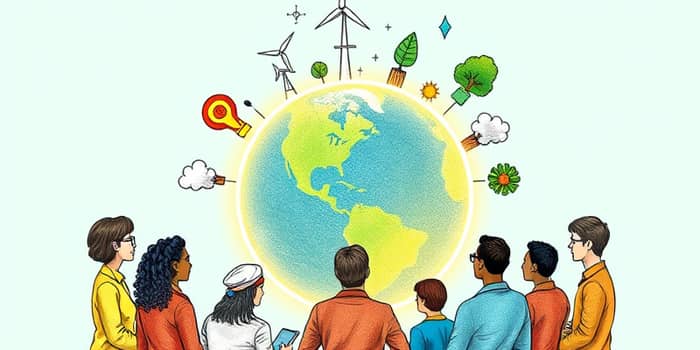
In today’s complex world, Environmental, Social, and Governance (ESG) has grown far beyond a set of compliance checkboxes. Leading organizations embed ESG into their core, unlocking tangible value and reshaping industries.
Redefining ESG: From Compliance to Value Creation
ESG is no longer a peripheral concern—it’s a strategic imperative woven into every facet of corporate decision-making. By aligning sustainability with business priorities, companies move from mere reporting to measurable impacts on risk, operations and profitability.
At its heart, ESG rests on three pillars: environmental stewardship, social responsibility, and robust governance. Integrated effectively, these pillars foster enhanced reputation and investor appeal, reduce operational costs, and drive innovation.
2026 ESG Trends and Forecasts
As we approach 2026, a new wave of ESG maturity is emerging. Regulatory landscapes are shifting, technologies are evolving, and stakeholders demand transparency.
- Transition planning and decarbonization will define true ESG leadership, with clear roadmaps, capital allocation, and milestone tracking.
- Social and human capital focus sharpens through workforce resilience, DEI initiatives, and supply chain human rights audits.
- Technology and digitization accelerate ESG reporting via automated data collection and validation powered by AI.
- Regulatory and disclosure evolution simplifies thresholds but tightens due diligence under CSRD, CSDDD, and TNFD frameworks.
- Sector-specific pressures grow in clean energy manufacturing, data centers, and biodiversity protection.
These trends converge to drive material outcomes—credible net-zero pathways, inclusive cultures, and assured data integrity.
Success Stories: Real-World Case Studies
Leading enterprises illustrate how ESG strategies translate into financial gains and stakeholder trust. Their lessons inform every organization’s journey.
- Unilever’s Sustainable Living Plan achieved 100% renewable energy by 2030 and improved health outcomes for over 1 billion people.
- Salesforce reached net-zero emissions, operates on 100% renewable energy by 2022, and closed gender pay gap policies.
- Walmart’s supply chain sustainability yielded significant GHG reductions and cost savings, boosting productivity.
- IKEA targets climate positivity by 2030 with solar installations and ethical sourcing of managed forests.
- Patagonia aims for absolute carbon neutrality by 2025, decoupling growth from emissions.
Across these examples, ESG emerges as a powerful revenue driver, cost reducer, and talent magnet.
Strategic Recommendations for Sustainable Synergies
To harness ESG’s full potential, organizations should adopt a cross-functional approach, aligning sustainability with finance, operations, and HR.
- Build a compelling business case showcasing cost savings and revenue growth through ESG investments.
- Prioritize data quality, traceability, and cross-functional collaboration for credible disclosures.
- Embed ESG metrics into executive incentives and performance reviews.
- Engage stakeholders regularly with transparent progress updates and iterative improvements.
Conclusion
ESG is no longer a buzzword; it’s a blueprint for resilience, innovation, and long-term value. Organizations that move beyond compliance—crafting detailed transition plans, embracing human capital, and leveraging technology—will thrive in the evolving global landscape. By learning from leading cases and adopting strategic synergies, every company can unlock the true power of sustainable business.
References
- https://rimm.io/blog/esg-at-a-crossroads-2026-trends-and-insights-for-navigating-a-shifting-sustainability-landscape/
- https://www.globalassociationforesg.com/post/leading-the-esg-charge-3-success-stories-of-companies-in-esg-integration
- https://www.dfinsolutions.com/knowledge-hub/blog/esg-trends-2025-and-what-expect-2026
- https://goveva.com/blog/esg-strategies-and-case-studies
- https://sustainability.freshfields.com/post/102mfa5/7-esg-trends-to-watch-in-2026
- https://www.affinityequity.com/esg-affinity/esg-integration
- https://www.sustainabilityprofessionals.org/good-business-three-case-studies-in-corporate-power-wielding-on-climate-change
- https://www.lw.com/en/insights/esg-and-sustainability-insights-10-things-that-should-be-top-of-mind-in-2026
- https://www.northpeakadvisory.com/about/case-studies
- https://www.ey.com/en_lu/insights/wealth-asset-management/luxembourg-market-pulse/sustainable-finance-2025
- https://www.pwc.com/gx/en/services/sustainability/publications/casestudy.html
- https://www.skadden.com/insights/publications/2026/01/2025-esg-wrap-up-and-2026-outlook
- https://environenergy.com/2026/01/top-esg-and-sustainability-trends-to-watch-in-2026/