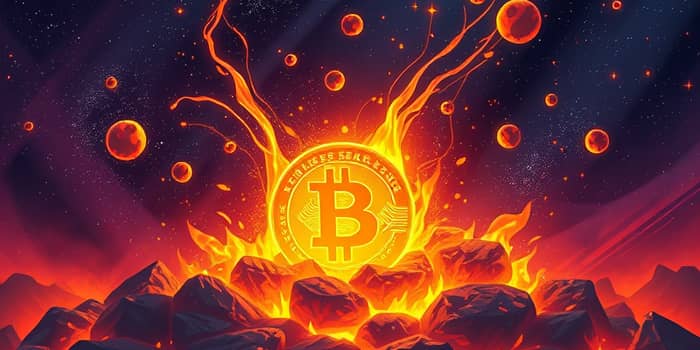
In the fast-evolving world of cryptocurrencies, token burns have emerged as a powerful mechanism to permanently remove cryptocurrency tokens from circulation and introduce scarcity. By sending tokens to an inaccessible burn address or leveraging smart contract logic that destroys them, projects can reduce supply, signal confidence, and potentially drive price appreciation. This article dives deep into how token burns work, why teams employ them, and how stakeholders can leverage this strategy for long-term success.
Understanding the Core Concept of Token Burns
At its heart, a token burn is a deliberate process of sending tokens to a verifiably inaccessible address or invoking smart contract functions that deduct balances and adjust supply variables. Once executed, these tokens become mathematically irrecoverable, effectively shrinking the total pool of tokens available.
Burn addresses are publicly known on the blockchain, offering transparent on-chain verification mechanisms. In smart contract models, automated routines reduce both user balances and overall supply counts, ensuring precise, tamper-proof execution without manual intervention.
Mechanisms Behind Token Burns
Various approaches exist to implement burns. Each method balances transparency, automation, and stakeholder involvement to maintain trust and efficiency.
- Burn Address Method: Tokens are transferred to a wallet with no private key, recorded on-chain for full auditability.
- Smart Contract Destruction: Contracts execute logic that deducts tokens and updates total supply variables automatically.
- Automated Scheduling: Fixed intervals or amounts are burned without requiring manual triggers.
- Usage-Linked Burns: A percentage of transaction fees or revenue is automatically destroyed per activity.
- Event-Driven Destruction: Milestones, governance votes, or feature upgrades initiate one-off burns.
Strategic Motivations for Burning Tokens
Projects employ token burns for a variety of strategic reasons. While the core goal is to foster scarcity, each initiative tailors its approach to align with broader economic and community objectives.
- Supply Discipline: Offset inflationary issuance and create sustainable deflationary pressure on supply.
- Scarcity and Value Creation: Mimic corporate stock buybacks to reduce outstanding tokens and potentially boost market price.
- Incentive Alignment: Tie token burns to usage or revenue to reward committed participants over short-term speculators.
- Confidence Signaling: Demonstrate unwavering commitment to long-term vision and economic sustainability.
- Community Governance: Empower stakeholders to decide on burn schedules, amounts, or triggers via on-chain votes.
Economic Impacts and Real-World Examples
Token burns can influence supply dynamics and market sentiment, but their effectiveness depends on project fundamentals, demand, and overall tokenomics design. A well-executed burn reduces circulating supply, potentially placing upward pressure on price if demand remains constant or grows.
Consider popular networks that auto-burn transaction fees as usage scales. If issuance remains constant while fee burns grow, net supply shrinks over time. Injective Protocol, for example, transitioned from direct protocol burns to community-governed buybacks, enabling flexible parameters while maintaining deflationary pressure.
Nonetheless, small burns relative to issuance cycles may have negligible price impact. Investors must analyze burn magnitude alongside metrics such as daily transaction volume, revenue streams, and total token supply to form realistic expectations.
Practical Tips for Investors and Project Teams
Whether you are evaluating a token for investment or designing tokenomic models, understanding best practices around burns is essential to avoid pitfalls and maximize potential benefits.
- Assess Burn Magnitude: Evaluate burn size relative to total supply and new issuance rates to gauge real deflationary impact.
- Monitor On-Chain Activity: Track burn transactions, fee revenue, and network usage to anticipate supply adjustments.
- Prioritize Utility: Ensure tokens have clear use cases and revenue models that justify burns beyond mere speculation.
- Engage Community: Use governance votes to set transparent burn schedules and foster stakeholder alignment.
- Leverage Automation: Adopt automated scheduled burns for consistency and to remove manual execution risks.
Future Outlook and Governance Evolution
As blockchain ecosystems mature, token burn mechanisms will likely become more sophisticated, integrating dynamic parameters that respond to market conditions. Future models may include algorithmic adjustments where burn rates increase during high usage periods and recede in downturns, ensuring balanced supply discipline.
Governance frameworks will play an increasingly pivotal role. By granting token holders decision-making power over burn triggers, amounts, and schedules, projects can cultivate a stronger sense of ownership and resilience against unforeseen market shifts.
Ultimately, the token burn is more than a technical function—it embodies a broader philosophy of responsible supply management, incentive alignment, and transparent economics. When designed thoughtfully, burns can help projects thrive in competitive environments and reward long-term supporters.
By combining clear burn strategies with robust token utility and active governance participation, crypto communities can harness the power of scarcity to build sustainable, value-driven ecosystems.