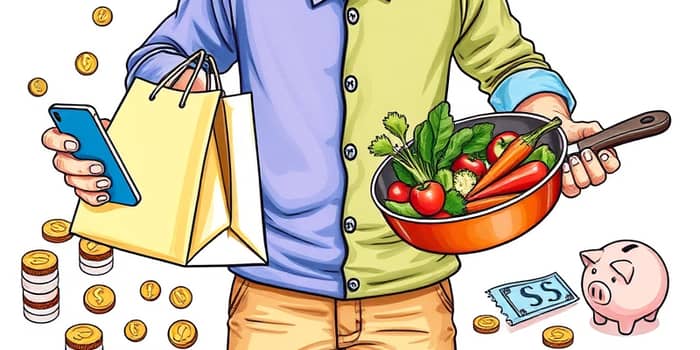
In a world driven by speed and ease, many of us overlook the real expense of small conveniences. The average U.S. household spends an average monthly spend of $6,545, but half of that is locked into essentials like housing and transportation, leaving the rest vulnerable to hidden convenience premiums.
The Convenience Trap
Convenience spending—dining out, delivery, rideshares, and impulse purchases—often seems negligible in the moment. Yet, these routine choices add up quickly, eroding our potential savings and financial resilience.
In 2024, households allocated 12.9% of total spending on food, splitting into $6,224 for food at home versus $3,945 for food away from home. That means 39% of the food budget goes to delivery and takeout, where fees can inflate costs by 15–30%.
Transportation presents a similar story: rideshares and deliveries add convenience but come at a premium compared to public transit or carpooling. Even personal care and shopping routines, from salon visits to fast-fashion impulse buys, carry hidden fees that quietly drain monthly budgets.
Understanding Household Spending Patterns
To illustrate where convenience costs lurk, consider the following breakdown of U.S. household spending for 2024, drawn from BLS data. The table highlights the percentage and dollar amounts alongside convenience angles:
This snapshot reveals how essential categories consume 50% of spending, leaving smaller slices ripe for convenience-driven inflation.
The Income Divide: A K-Shaped Spending Pattern
Not all households feel convenience costs equally. Higher-income families can absorb delivery fees and premium subscriptions because higher-income households sustain conveniences through wealth gains, tax benefits, and steady wage growth. In 2026, they support 2.7–2.8% spending growth despite economic uncertainty.
Conversely, middle- and lower-income households allocate up to 61% of spending to essentials—compared to 42% for top earners. With wage growth slowing and prices soaring, these families must cut conveniences like takeout and rideshares to make ends meet. In early 2026, card data showed spending growth at +2.5% YoY for high earners but just +0.3% for low-income households—the widest gap since 2022.
Real Costs and 2026 Outlook
Trend data from 2010 to 2024 underscores the convenience creep: food away rose from $2,505 to $3,945 annually, alcohol away from $190 to $374, and gym memberships from $121 to $272. Meanwhile, at-home alternatives grew more modestly, signaling rising premiums for quick solutions.
Looking ahead, overall spending is projected to rise by 2.8% in 2026. Yet, policy changes and savings buffers will likely widen the K-shaped divide. Tax cuts favoring the wealthy and program cuts for low-income families will deepen disparities, making deliberate cost-cutting strategies more critical than ever.
Savings Strategies: Deliberate Alternatives
Replacing convenience with deliberate alternatives can unlock significant savings without sacrificing quality of life. Here are practical steps to reclaim your budget:
- Meal Planning and Home Cooking: Swap half of your delivery orders for home-cooked meals. Cooking at home saves up to 38% compared to dining out, equating to nearly $2,000 annually when you cut food away from home in half.
- Public Transit and Carpooling: Replace rideshare trips with bus or train rides. Many cities offer multi-ride discounts, reducing transport costs by up to 50%.
- At-Home Fitness Routines: Invest in basic equipment or free online workouts. Home fitness can cost $225 annually versus $272 for gym memberships, plus you gain schedule flexibility.
- Subscription Audits: Review and trim streaming, software, and membership services. Eliminating underused subscriptions can save $100–$300 per year.
- Bulk Buying and DIY Personal Care: Purchase staples in bulk and use at-home beauty treatments instead of salon visits. This approach often costs 20–30% less per service.
Implementing even a few of these strategies can bolster your emergency fund, accelerate debt repayment, or finance future goals.
Conclusion: Building Financial Resilience
Convenience comes at a cost that compounds over time. By understanding how hidden premiums eat into your budget and adopting cooking at home saves money and other deliberate alternatives, you can reverse the convenience trap and foster lasting financial health.
As the spending divide widens, making mindful choices isn’t just smart—it’s essential. With focused effort, households of all incomes can protect their savings, reduce stress, and build a more resilient financial future.
References
- https://www.bls.gov/opub/ted/2026/housing-and-transportation-accounted-for-50-percent-of-household-spending-in-2024.htm
- https://www.bls.gov/opub/ted/2026/the-new-year-and-household-spending.htm
- https://economics.td.com/us-k-shaped-consumer-spending
- https://www.elitepersonalfinance.com/average-household-budget/
- https://www.cbo.gov/publication/62105
- https://www.upside.com/business/retailer-blog/consumer-spending-trends-2026
- https://www.deloitte.com/us/en/insights/topics/economy/consumer-pulse/state-of-the-us-consumer.html
- https://www.youtube.com/watch?v=_pBTzgF-0C0