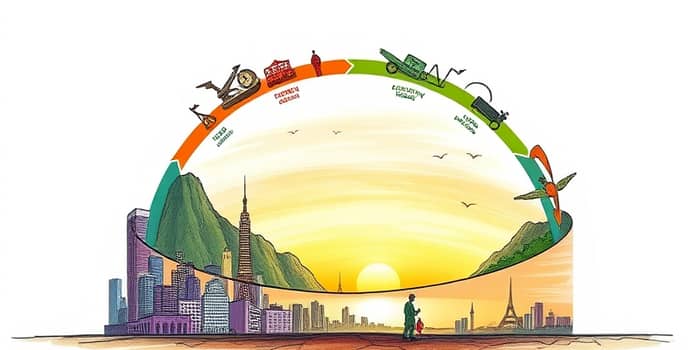
Every economy moves through predictable swings, and recognizing these shifts can empower you to protect and grow your wealth. By understanding the stages of business cycles and their impact, you’ll be better prepared to make informed financial decisions.
The Four Stages of the Economic Cycle
Economic cycles trace the circular journey of an economy from expansion through contraction and back again. While durations and intensities vary, most cycles feature these key phases:
- Expansion (Recovery) – GDP rises, employment gains momentum, wages climb, and consumer demand increases, fueled by low interest rates that make borrowing affordable.
- Peak – Growth hits its maximum point, production costs rise, and businesses begin to plateau, often passing higher prices to consumers.
- Contraction (Recession) – Economic activity declines, GDP growth slows or turns negative, layoffs rise, and consumer spending contracts.
- Trough (Recovery Bottom) – The lowest phase, when the economy stabilizes and begins a gradual rebound toward expansion.
Key Economic Indicators to Watch
Tracking reliable data can help you anticipate where the economy stands in its cycle:
- Gross Domestic Product (GDP)
- Employment and unemployment rates
- Industrial production and capacity utilization
- Consumer spending and retail sales
- Inflation and consumer-price indices
- Interest rates set by central banks
- Housing starts and home sales
How Economic Cycles Affect Your Personal Finances
Each phase of the cycle exerts unique pressures and opportunities on your wallet. By aligning your decisions with the current stage, you can strengthen your financial position.
During expansion, a robust emergency fund covering several months of expenses is easier to build thanks to higher incomes and lower borrowing costs. Conversely, in contraction, saving becomes challenging as layoffs rise and cost of living outpaces wages.
Investors often see portfolios appreciate in booming markets, while recessions may trigger market dips. Yet downturns can also offer buying opportunities for those with cash reserves ready to purchase undervalued assets.
Summary Table: Cycle Phases and Financial Impacts
Psychological and Behavioral Impacts
Economic downturns can trigger fear and negativity, creating a self-fulfilling cycle of reduced spending. Anxiety over job security often leads even financially stable individuals to cut back unnecessarily.
During booms, optimism can lead to overconfidence and excessive risk-taking. Striking a balance between confidence and caution requires awareness of the cycle’s stage and your personal risk tolerance.
Practical Strategies to Navigate Economic Cycles
Proactive planning makes all the difference. Adopt these essential approaches to weather any phase and emerge stronger:
- Build and maintain an emergency fund of at least 3–6 months’ expenses plus extra for loan repayments.
- Diversify investments across asset classes (stocks, bonds, real estate) to mitigate risks associated with economic volatility.
- Regularly revisit and adjust your budget to reflect changes in inflation, interest rates, and income.
- Pay off high-interest debt first and consider refinancing when rates drop.
- Delay major purchases during uncertain contraction phases; prioritize essentials.
- Stay informed by reviewing economic data and expert analyses to anticipate shifts.
- Seek professional advice tailored to current and expected economic conditions.
Government and Policy Responses
To counter downturns, governments and central banks may lower interest rates, implement fiscal stimulus, or adjust tax policies. These interventions often take time to ripple through the economy, so personal patience and preparedness remain key.
Key Takeaway
Understanding where we stand in the economic cycle empowers you to make informed choices about careers, investments, borrowing, and saving. By aligning personal finance strategies with the macroeconomic environment, you can safeguard your financial future and capitalize on the opportunities every phase brings.
References
- https://www.fe.training/free-resources/asset-management/stages-of-the-economic-cycle/
- https://www.avaii.com/blog/how-economic-indicators-affect-personal-finance
- https://www.sofi.com/learn/content/what-is-the-business-cycle/
- https://1finance.co.in/blog/managing-economic-cycles-a-comprehensive-guide-through-ups-and-downs-temperament-by-1-finance/
- https://www.britannica.com/money/stages-of-economic-cycle
- https://www.pocketsmith.com/blog/how-does-a-recession-affect-your-personal-finances/
- https://www.financialpipeline.com/the-4-phases-of-the-business-cycle/
- https://www.discover.com/personal-loans/resources/consolidate-debt/plan-after-recession/
- https://www.spw.com/insights/what-is-an-economic-cycle/
- https://www.truist.com/money-mindset/principles/budgeting-by-values/how-to-prepare-for-a-recession
- https://corporatefinanceinstitute.com/resources/economics/business-cycle/
- https://finred.usalearning.gov/Money/Inflation
- https://www.stlouisfed.org/publications/page-one-economics/2023/03/01/all-about-the-business-cycle-where-do-recessions-come-from
- https://www.morganstanley.com/articles/managing-finances-during-recession
- https://www.congress.gov/crs-product/IF10411